

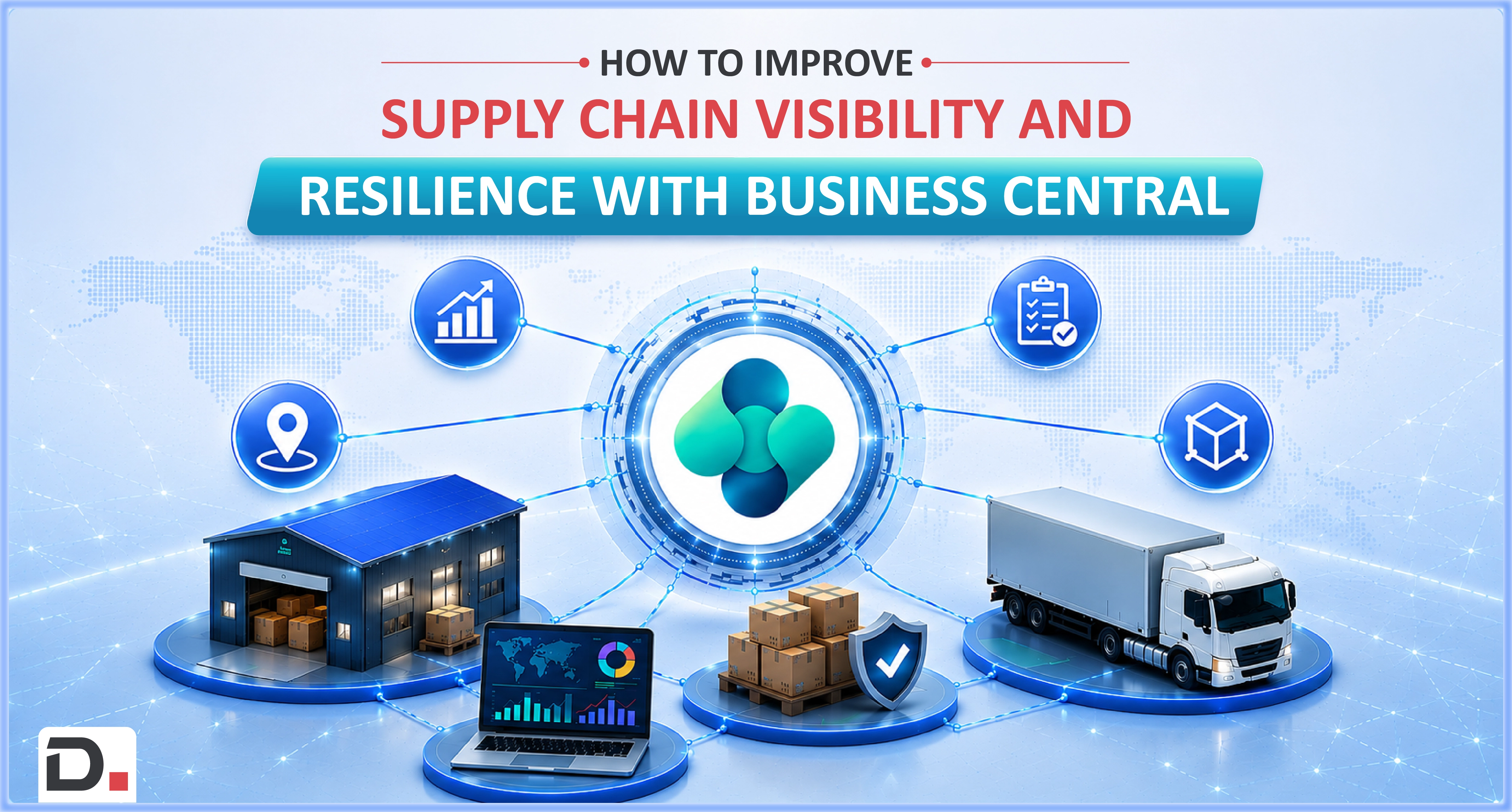
Table of Content
Today’s supply chains are a bit more dynamic, and also more fragile than ever before. Between customer demand that keeps shifting supplier delays that seem to pop up out of nowhere, transportation interruptions, and even the continuing increase in operational expenses, organizations really need to be ready to react quickly to whatever the market decides to throw at them.
A lot of the old style supply chain methods still lean on spreadsheets, disconnected tools, and a ton of manual updates, and that ends up leaving annoying blind spots. In practice decision makers often can’t pull up near real time inventory details, they have trouble forecasting demand with enough accuracy, and they don’t always spot disruptions early enough to prevent customer impact.
This is exactly where Business Central Supply Chain Management comes in. Think of it as an intelligent Supply Chain ERP, Microsoft Dynamics 365 Business Central gives businesses end to end visibility across procurement, inventory, warehousing, production, and logistics. When every part of the chain connects inside one platform, teams get the clarity they need to move quicker with evidence based decisions while also boosting resilience.
If you’re a manufacturer, distributor, wholesaler, or retailer, Business Central helps you fine tune inventory levels, improve supplier rapport, strengthen procurement planning, and keep customer service consistently strong even when conditions are uncertain.
Why Supply Chain Visibility matters?
Supply chain visibility is basically the capacity to keep track of products, inventory, suppliers, storage sites, and transport activity in near real time, across the full chain . Like, not just one step, but the whole rhythm.
When an organization has more visibility, it can :
- Keep an eye on inventory across different locations
- Spot supplier delays early before they turn into something critical
- Cut down on both shortages and surplus stock
- Strengthen customer delivery promises
- React faster when markets or conditions shift
- Cooperate better between departments
- Make smarter buying choices
- Lower day to day operating expenses
If visibility is incomplete, companies usually end up dealing with late shipments, inventory numbers that don’t match reality, weaker forecasting, and customers who feel left waiting or ignored.
Common supply chain challenges businesses deal with
Most modern orgs run into a bunch of hurdles that can quietly affect margins and also your customer experience both at once.
Limited inventory visibility
When inventory tools are disconnected, it gets hard to tell which items are actually on hand, where they’re kept, and when replenishment is really needed.
Inaccurate demand forecasting
If companies do not have solid historical info along with real time signals, they end up stacking too much of slow moving goods, and then later they’re short on the high demand stuff.
A strong demand forecasting ERP can help organizations predict customer demand better and keep inventory levels balanced, not too much not too little.
Procurement delays
Manual buying can drag, because approvals can sit around, reorder points get missed, and sometimes supplier communication turns into a messy loop.
With an intelligent procurement planning ERP, purchasing tasks get automated and procurement decisions happen on time.
Logistics inefficiencies
Without logistics management, shipment tracking, warehouse coordination, and last mile delivery management become way more painful than they should be.
Supplier risks
If a supplier hits unexpected delays, changes pricing, or sends questionable quality, it can throw off production timing and also customer deliveries, fast.
What is Business Central Supply Chain Management?
Business Central Supply Chain Management is basically an integrated setup inside Microsoft Dynamics 365 Business Central , that lets companies run their procurement, inventory, warehouse stuff, manufacturing, order fulfillment, and logistics all from one place.
So, instead of bouncing between a bunch of disconnected tools, you get this centered overview of your whole supply chain, kind of end to end, without the usual back and forth.
You can think of the main functional spots as things like:
Inventory Management , Purchasing, Sales Order Management , Warehouse Management , Vendor Management, and Manufacturing Planning. There’s also Demand Forecasting and Item Tracking, plus Supply Planning and Logistics Coordination. And then of course there’s Reporting and Analytics, which ties it together.
In other words, as a modern Supply Chain ERP, Business Central shows real-time visibility, so organizations can make proactive calls, not just respond after issues have already popped up.
Key Features That Boost Supply Chain Visibility
1. Real-Time Inventory Management
Inventory is the nerve center of the whole supply chain, really.
Business Central gives full, live coverage of inventory levels across warehouses, store locations, production plants, and distribution centers.
Companies can :
- Track inventory in real time
- Observe stock movements
- See what is actually available, right away
- Cut down stock mismatches
- Stop stockouts before they show up
- Avoid too much inventory sitting on shelves
When inventory data is precise, companies can speed up order fulfillment, while also lowering carrying expenses.
2. Intelligent Procurement Planning
Procurement is not just buying stuff, it’s about obtaining the right inventory, at the right moment, from the right suppliers.
Business Central works like a full Procurement Planning ERP, and it automates purchasing based on inventory status, demand forecasts, and supplier lead time.
Organizations are able to :
- Create purchase orders automatically
- Set reorder thresholds
- Follow supplier performance over time
- Compare supplier quotes and vendor rates
- Handle approvals digitally, without extra back and forth
- Cut down manual purchasing mistakes, pretty directly
That usually means quicker buying cycles and closer supplier relationships.
3. Advanced Demand Forecasting
Demand swings can hit profits fast.
Business Central leans on past sales data, seasonal patterns, and planning settings to make forecasting more reliable.
As a Demand Forecasting ERP that works in practice, it helps teams to :
- Forecast upcoming demand
- Refine production schedules
- Balance inventory investments more smartly
- Reduce dead or obsolete inventory
- Lower the need for last-minute emergency orders
- Lift customer satisfaction, because fewer delays happen
With forecasting that is on the mark, businesses can keep the right inventory level without locking up too much working capital.
4. Centralized Warehouse Management
Running multiple warehouses by hand often turns into inventory confusion, and then audits become painful.
Business Central includes warehouse functions that help businesses :
- Improve warehouse layout design
- Track inventory movements reliably
- Run bin locations in an organized way
- Increase picking accuracy
- Speed up receiving workflows
- Reduce mistakes during fulfillment
Warehouse teams can check the correct details in real time, which improves how fast and steady daily operations run.
5. End-to-End Order Tracking
Customers want visibility, not vague promises.
Business Central allows organizations to keep an eye on orders starting from the quotation stage, all the way through delivery.
Teams can spot quickly :
- Order status
- Inventory availability
- Shipping progress and routing changes
- Delivery timelines that are realistic
- Pending purchase orders
- Backordered items that need attention
Better visibility makes customer communication cleaner, while also reducing avoidable delivery delays.
6. Integrated Logistics Management
Transportation matters a lot for supply chain performance.
Business Central works together with your Logistics Management System, supporting shipment coordination, inventory movement, and delivery planning.
Businesses gain from :
- Better shipment planning
- Swifter dispatch processes
- Stronger warehouse coordination
- Less transportation lag
- Reliable shipping documents
- Improved customer updates during transit
With integrated logistics, organizations can streamline daily work and still improve delivery outcomes.
7. Supplier Performance Monitoring
Solid suppliers help protect supply chain stability, especially when conditions get weird.
Business Central lets businesses evaluate vendors using KPIs like :
- Delivery timelines
- Order accuracy and completeness
- Product quality signals
- Purchase history trends
- Pricing consistency over time
- Overall supplier reliability
Those insights help build stronger partnerships and lower supply risks, step by step.
8. Business Intelligence and Real-Time Dashboards
Leaders don’t want reports from last month, they want clarity right now.
Business Central delivers interactive dashboards and reporting that provide real-time visibility into supply chain operations.
Executives can review :
- Inventory turnover
- Purchase trend lines
- Vendor performance patterns
- Sales demand insights
- Warehouse utilization
- Order fulfillment performance
- Procurement costs
- Supply chain KPIs
When accurate data is available instantly, businesses can detect problems earlier, and then choose better strategic actions.
Building a More Resilient Supply Chain with Business Central Supply Chain Management
Supply chain resilience is basically an organization ability to anticipate, adapt and recover from all kinds of disruptions, while still keeping business continuity. This can include supplier shortages, transport delays, sudden demand spikes, or those geopolitical challenges that nobody really wants. Resilient companies, tend to handle it better, without letting customer satisfaction slip too much.
Business Central Supply Chain Management helps you build that resilience using a connected, data driven environment that supports more proactive decisions, even when things get messy.
1. Respond Fast to Disruptions
With real-time data, businesses can spot trouble early, before it turns into a bigger issue. If a supplier delay shows up or an inventory shortage is brewing, teams can quickly check stock positions, find an alternative supplier, or realign production timing.
So instead of waiting until problems already hit customers, organizations can act sooner, in a preventive way.
2. Improve Collaboration across Departments
Supply chain choices usually touch purchasing, sales, finance, warehouse, and production. Business Central stitches these teams together into one platform, so everybody uses the same real time information (not different versions, not half updates
That kind of teamwork helps close communication gaps, lowers mistakes, and speeds up decision-making.
3. Optimize Inventory Spend
Keeping too much inventory can freeze capital, but not having enough means lost sales. Business Central helps balance that tradeoff with intelligent inventory planning, automated replenishment, and more accurate forecasting.
In the end, organizations can lower carrying costs while still keeping products readily available.
4. Strengthen Supplier Ties
A resilient supply chain really depends on suppliers you can count on. Business Central gives visibility into supplier performance, so procurement teams can track lead times, delivery reliability, pricing behavior, and prior order history.
Those insights make better negotiations easier, can improve vendor relationships, and support smarter sourcing decisions overall.
5. Enable Growth that scales
When businesses move into new markets, add warehouses, or expand product lines, the supply chain gets more complicated. Business Central scales with you, allowing multiple locations, currencies, vendors, and inventory to be managed without piling on unnecessary operational chaos.
Industry Use Cases
Business Central supports a broad range of industries by making things more clear and run smoother across the supply chain, visibility plus operational efficiency.
Manufacturing
For manufacturing teams, procurement needs to happen on time and production planning has to be precise. Business Central supports the whole loop, it helps track raw materials, manage bills of materials, keep an eye on work orders, and even forecast production needs. That way the manufacturing work is generally steadier.
Wholesale and Distribution
Distributors typically like a centralized approach to inventory management. With Business Central, automated purchasing and warehouse optimization become more manageable, and order fulfillment moves faster. Since stock visibility is near real time, they can respond to customer demand while reducing the amount of money tied up in inventory costs.
Retail and E-commerce
Retailers and e-commerce operations can align inventory across physical stores, warehouses, and online channels. With automated replenishment plus stronger demand forecasting, they are less likely to run into stockouts during busy periods, though they also reduce excess inventory, which is kind of the goal.
Food and Beverage
In food and beverage, where products are perishable, businesses can lean on item tracking. They can also handle lot and serial number management, boost inventory visibility, and monitor suppliers better. This improves traceability, helps maintain compliance, and keeps things in check.
Improving Supply Chain Visibility: Some best practices that actually help
Technology matters, sure, but it is only one chunk of a bigger supply chain plan. Companies also need to adopt good habits, especially if they want to squeeze more value out of their Supply Chain ERP , and not just treat it like another system that sits there.
- Keep Master Data sharp
- Automate the small, repeatable stuff
- Check your KPIs on a regular cadence
- Strengthen collaboration with suppliers
- Use analytics that feel real time
Why choose Business Central as your supply chain ERP?
Instead of using a few standalone inventory or warehouse tools, Business Central brings everything together in a single platform. It links supply chain tasks with finance, sales, purchasing, manufacturing, and even customer service in a way that usually feels more connected than separate systems.
Some key advantages, not just “nice to have”, are things like:
- Full end to end supply chain visibility, so you can actually see what’s going on
- Automated procurement and replenishment workflows that run with less manual hassle
- Smarter demand forecasting, not only guesses but more informed planning
- Centralized inventory management across locations and items
- Compatibility and integration with Microsoft 365, Power BI, and the Power Platform
- A scalable cloud based architecture, ready to grow when you do
- Better collaboration between departments, because teams are not working in isolation
- Higher operational efficiency plus tighter cost control
When companies consolidate their business processes into one solution, they generally reduce those data silos, improve productivity overall, and get stronger control of day to day operations.
Conclusion
In today’s fast-changing business environment, visibility and resilience aren’t really optional anymore, they’re required if you want long-term success. Companies that don’t have real time insights into procurement, inventory, logistics, and supplier performance tend to stumble when disruptions show up, and yeah that usually means higher costs and lower customer satisfaction.
Business Central Supply Chain Management gives organizations the right kind of tools to push past that kind of problems. As an intelligent Supply Chain ERP, it brings procurement planning, inventory control, warehouse work, demand forecasting, and logistics together in one connected platform. You get things like automated purchasing, advanced analytics, real-time dashboards, and collaboration that actually feels smooth. So, in practice businesses can run operations more efficiently, cut down on risks ,and get a supply chain that’s more adaptive and resilient.
So, whether you want to optimize stock levels, strengthen supplier partnerships, improve forecasting precision, or just deliver better customer service, Business Central helps you get the visibility and the control you need to stay competitive in a marketplace that keeps evolving.
Ready to Transform Your Supply Chain?
If you want to boost supply chain transparency, streamline procurement, and build a more resilient business using Microsoft Dynamics 365 Business Central, our specialists can guide you in implementing a solution that fits. It helps streamline day to day work, strengthens decision-making, and supports sustainable growth.
Reach out to us today and see how Business Central can modernize your supply chain and support long-term success.
FAQ
What is Business Central Supply Chain Management ?
Business Central Supply Chain Management is a wide ranging solution inside Microsoft Dynamics 365 Business Central, that helps organizations run procurement, inventory, warehouse tasks, production, logistics, and order fulfillment all from one single platform. It kind of ties everything together, so teams don’t need to jump between separate tools, you know?
How does Business Central improve supply chain visibility ?
Business Central gives real time insight into inventory status, purchasing activity, warehouse performance, supplier info, and sales reporting. That way businesses can keep an eye on day to day operations, notice disruptions early, and steer decisions with better context , not just guesses.
Is Business Central suitable for small and mid-sized businesses ?
Yes , absolutely. Business Central is made for growing companies too , with features that scale along the way and adjust as business needs change.
Can Business Central integrate with logistics solutions ?
Yes . Business Central can work with different logistics and transportation solutions, so companies can streamline shipping, coordinate warehouse activity, and smooth out delivery steps , through an integrated logistics management system.
How does Business Central support demand forecasting ?
Business Central uses past sales records, planning settings, and inventory details to sharpen forecasting quality. This helps maintain steadier stock levels, and reduce those awkward inventory related expenses that quietly add up.
.webp)
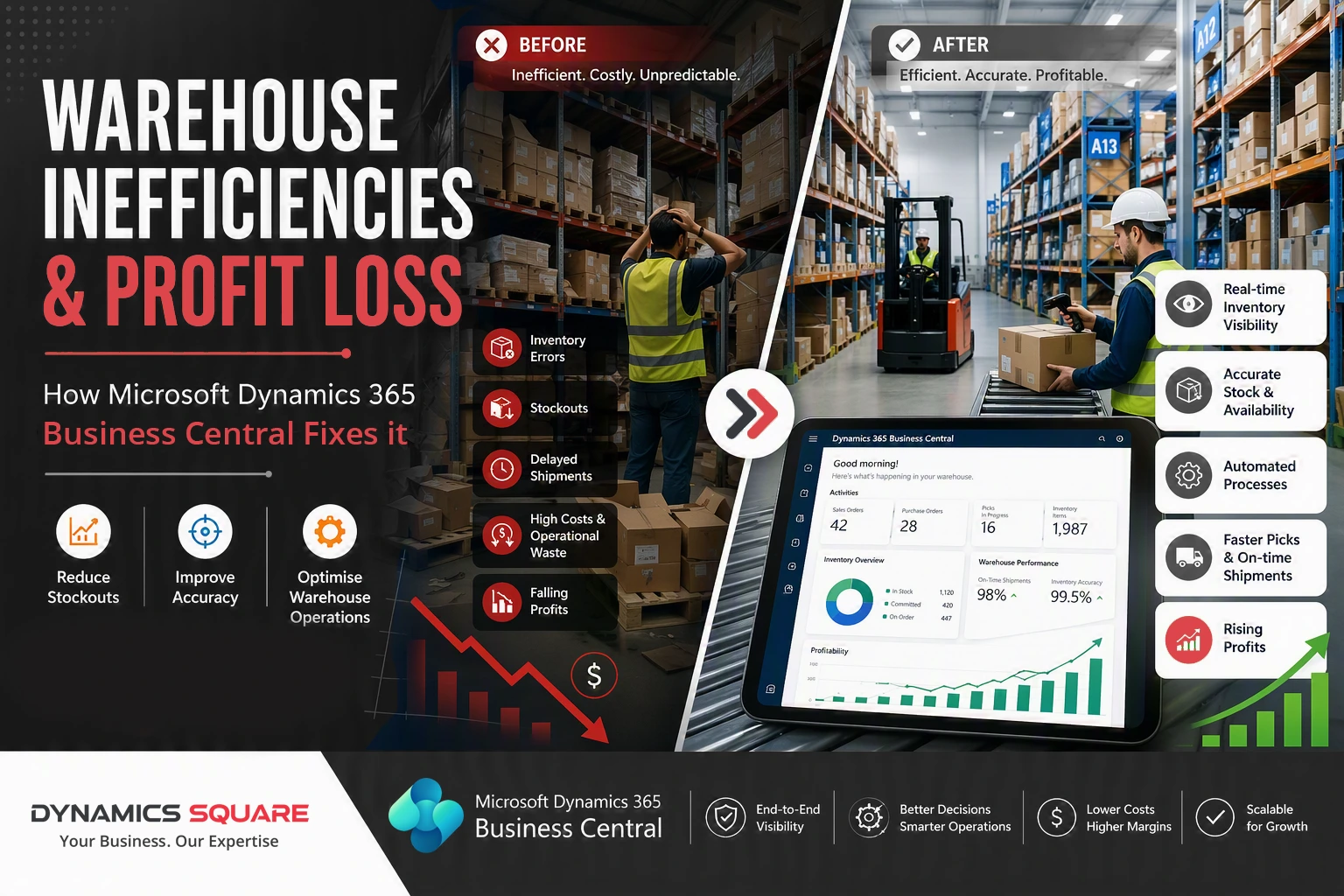

Business Central Implementation
Make the most of Dynamics 365 Business Central with the help of Dynamics Square team.
Disclaimer– “All data and information provided on this blog is for informational purposes only. Dynamics Square / MPG Business Information Systems Pvt. Ltd. makes no representations as to accuracy, completeness, currentness, suitability, or validity of any information on this site and will not be liable for any errors, omissions, or delays in this information or any losses, injuries, or damages arising from its display or use.”


Related Posts & Blogs
Contemporary businesses are changing at a rate of knots using innovative business solutions to stay afloat. Know more about industry trends, challenges and opportunities in detail after going through an array of exciting blogs.
Read the blogs penned by industry-experts who know the nerve of the business to start your digital transformation journey.

Discover how Microsoft Dynamics 365 Business Central with AI Copilot transforms ERP automation. From predictiv...

.webp)

Read this blog post to learn the difference between Business Central and Dynamics 365 Finance & Operations, Su...

For building a more resilient supply chain for the future, leaders should start investing in technologies toda...